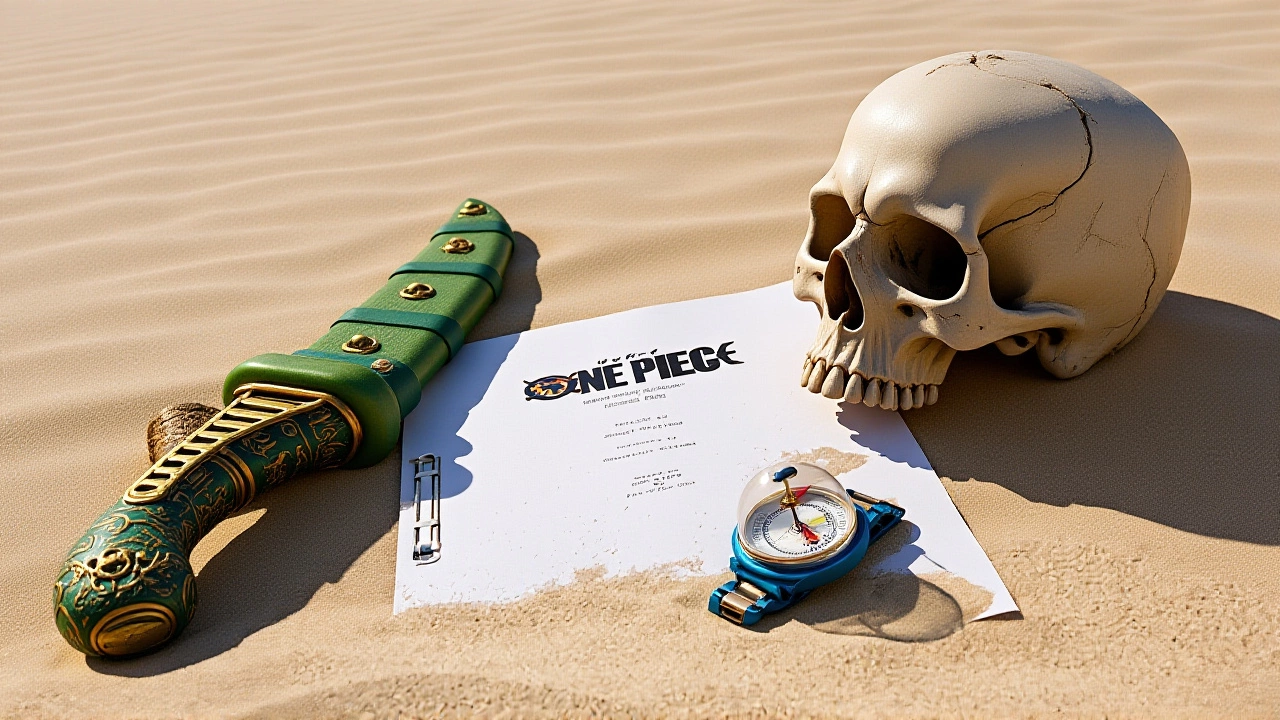
Netflix didn’t just renew ONE PIECE—it doubled down. On January 18, 2024, the streaming giant announced simultaneous renewals for Seasons 2 and 3 of its live-action adaptation of Eiichiro Oda’s legendary manga, just 140 days after Season 1 premiered to a staggering 143.56 million views in its first 11 days. The decision, made at Netflix’s headquarters in Los Gatos, California, wasn’t just a win—it was a statement. This isn’t another hit show. This is a global phenomenon that’s rewriting the rules of live-action anime adaptations.
Why This Renewal Wasn’t Just Expected—It Was Inevitable
Season 1 of ONE PIECE didn’t just debut. It exploded. With 39.6 million views in its first four days and 92 countries reporting over one million views each, it became Netflix’s third-most-watched live-action premiere of 2023, behind only The Night Agent and Ginny & Georgia Season 2. But numbers don’t tell the whole story. Parrot Analytics found global audience demand for the show peaked at 45.2 times the average series—higher than Stranger Things in its first season. That’s not popularity. That’s obsession.What made it work? A rare alignment of reverence and innovation. Unlike many Western adaptations that flatten source material, Tomorrow Studios, led by CEOs Marc Forman and Marty Adelstein, worked hand-in-hand with manga creator Eiichiro Oda, who retained full creative oversight. The result? A faithful, emotionally resonant adaptation that didn’t just please fans—it converted skeptics.
The Crew Behind the Magic
At the heart of the show’s success is a team that treated the source material like sacred text. Showrunner Matt Owens, who also directed all eight episodes of Season 1, insisted on shooting in Cape Town Film Studios—not for cost savings, but for the versatility of its landscapes. From the bustling docks of Foosha Village to the storm-lashed decks of the Thousand Sunny, the studio’s soundstages and surrounding terrain became the backbone of the series.The cast, too, was chosen with precision. Iñaki Godoy, a 20-year-old from Guadalajara, didn’t just play Monkey D. Luffy—he embodied the character’s boundless energy and childlike sincerity. Emily Rudd’s Nami felt like she stepped out of Oda’s panels, while Mackenyu Arata, a Japanese-American actor raised in Los Angeles, brought quiet intensity to Roronoa Zoro. Even the supporting roles—Jacob Romero Gibson as Usopp, Taz Skylar as Sanji—were cast with cultural authenticity in mind.
"We didn’t want to cast people who looked like they could play pirates," Adelstein told Deadline. "We wanted people who could make you believe they’ve spent their whole lives at sea."

What’s Coming: Water 7, Enies Lobby, and a 0 Million Epic
Seasons 2 and 3 will adapt roughly 300 manga chapters, covering the critically acclaimed Water 7 and Enies Lobby arcs—the emotional core of the series where loyalty is tested, friendships fracture, and the Straw Hats face their first true existential threat. According to Bela Bajaria, Netflix’s Chief Content Officer, these arcs will deliver "the most ambitious set pieces we’ve ever attempted in a live-action series."Each season carries a $150 million budget, matching Season 1’s scale. Production for Season 2 began February 15, 2023, and wrapped in December 2023. Season 3 is scheduled to begin filming in Q3 2024, again in Cape Town, with the same crew, same locations, and the same commitment to detail. The budget isn’t just for CGI—it’s for practical effects: real ships built from steel, custom-designed costumes stitched by hand, and stunt teams trained in Japanese martial arts to replicate Zoro’s three-sword style.
"We’re not making a TV show," said Peter Friedlander, Netflix’s Director of Original Series. "We’re building a world that will outlive us."
A Legacy That Outgrew the Screen
The success of the live-action series has reignited interest in the original manga, which has sold over 516.6 million copies worldwide as of December 2023—making it the best-selling manga of all time. Toei Animation’s long-running anime, now at 1,071 episodes, continues to air weekly in Japan, and Netflix’s version has become a gateway for a new generation. In Indonesia, Thailand, and Brazil, where anime fandom is massive but live-action adaptations are rare, ONE PIECE became a cultural touchstone. Parents are watching with their kids. Teens are rewatching the anime. And fans are re-reading the manga in record numbers."It’s the first time I’ve seen my 12-year-old niece cry because a pirate lost his hat," said one Reddit moderator from Manila. "And then she bought the whole manga set."
What’s Next?
With Seasons 2 and 3 already greenlit, the question isn’t whether ONE PIECE will end—it’s whether Netflix will go further. The licensing deal with Shueisha and Toei Animation, finalized in March 2020, requires at least three seasons. But with the story stretching over 1,000+ manga chapters, and the global audience still growing, a Season 4 isn’t just possible—it’s probable.For now, the crew is back on set in Cape Town, filming the climactic battle of Enies Lobby, where the Straw Hats defy an entire government. The stakes have never been higher. And for the first time, the world isn’t just watching a show.
They’re living it.
Frequently Asked Questions
How many manga chapters will Seasons 2 and 3 cover?
Seasons 2 and 3 will adapt approximately 300 manga chapters, primarily covering the Water 7 and Enies Lobby arcs—some of the most emotionally intense and visually complex storylines in the entire series. These arcs introduce major characters like Franky and Robin, and feature one of the most iconic battles in anime history, where the Straw Hats fight an entire nation to save their friend.
Why was Cape Town chosen for filming?
Cape Town Film Studios offered diverse landscapes—mountains, beaches, and urban backdrops—that could double for the varied islands in the One Piece world. The studio’s infrastructure, skilled local crew, and favorable production incentives made it ideal. Plus, the team wanted to avoid the overused Eastern European locations common in fantasy series. The result? A visually unique world that feels both fantastical and grounded.
Is Eiichiro Oda really involved in the adaptation?
Yes. Unlike many licensed adaptations, Oda has full creative oversight as executive producer. He reviews scripts, character designs, and even costume sketches. He reportedly approved the design of Luffy’s new straw hat after Season 1, calling it "perfect." His involvement is why longtime fans say this version feels more authentic than most anime adaptations.
What’s the budget for each season?
Each season carries a $150 million budget, making ONE PIECE one of the most expensive live-action series ever produced by Netflix. The money goes into practical effects—real ships, hand-sewn costumes, and location shoots—not just CGI. For comparison, Game of Thrones’ final season cost about $15 million per episode; ONE PIECE spends that per episode and more, with eight episodes per season.
Will there be a Season 4?
Not officially confirmed, but highly likely. Netflix’s licensing agreement requires at least three seasons, and the show’s global popularity suggests more. With over 1,000 manga chapters remaining, and the anime still ongoing, a Season 4 covering the Marineford and Dressrosa arcs is a logical next step. Industry insiders say Netflix is already quietly scouting locations for future seasons.
How does this compare to other anime adaptations?
Most live-action anime adaptations fail because they prioritize spectacle over story. ONE PIECE succeeded by honoring its source. Unlike the 2017 Netflix Death Note or Amazon’s One Punch Man, this version respects the manga’s tone, pacing, and emotional depth. It’s the first live-action anime adaptation to outperform its source material in global viewership—and that’s why it’s being renewed twice at once.